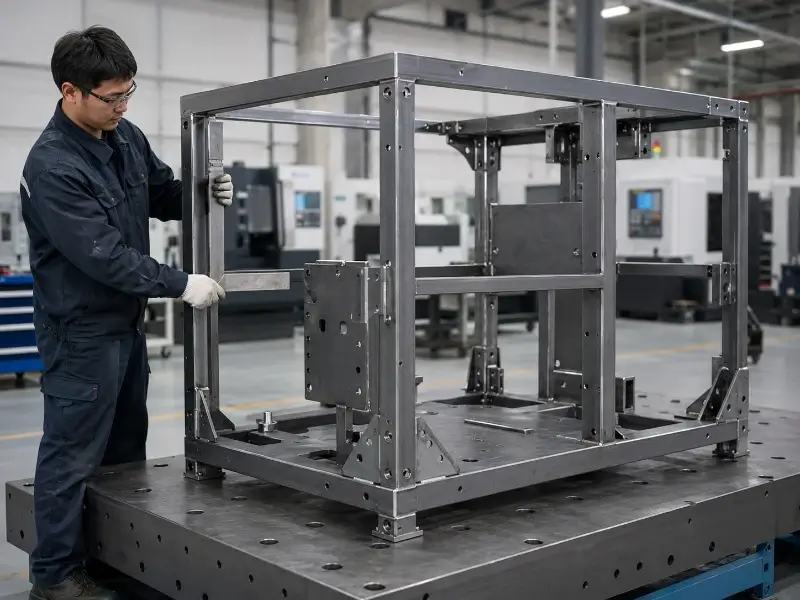
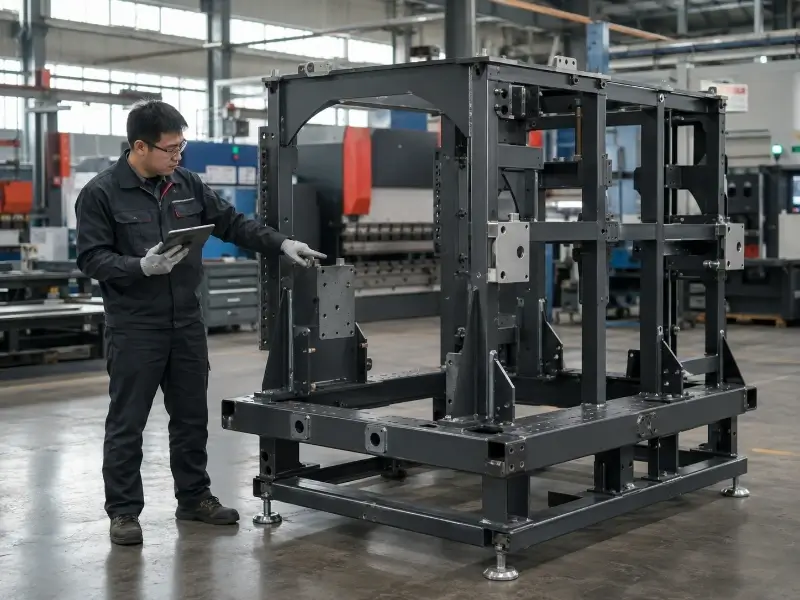
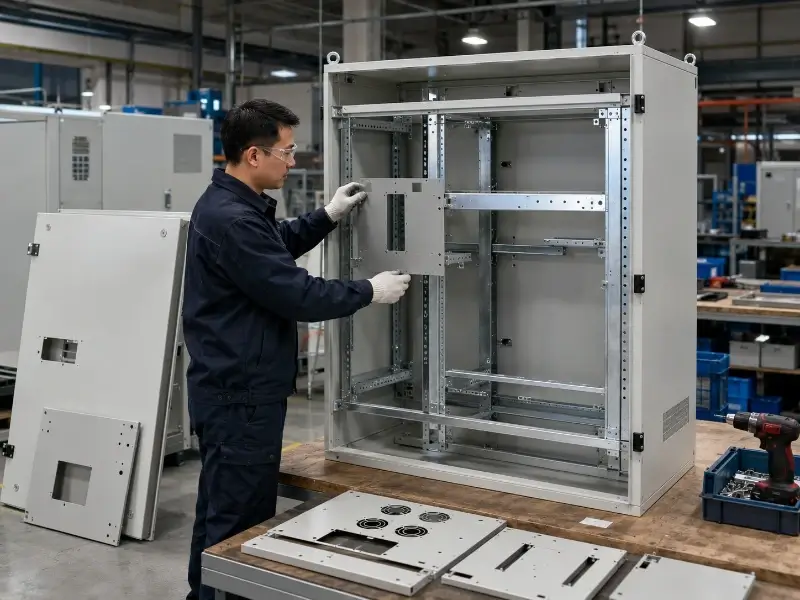
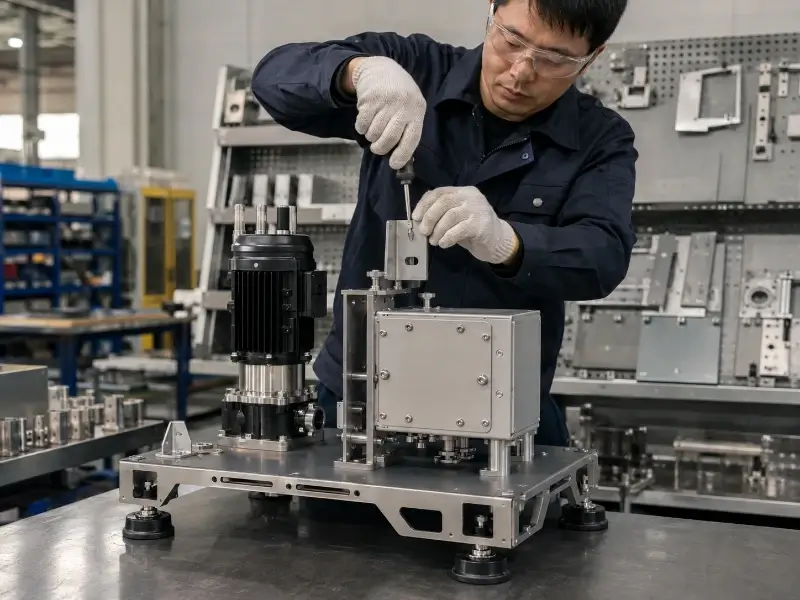
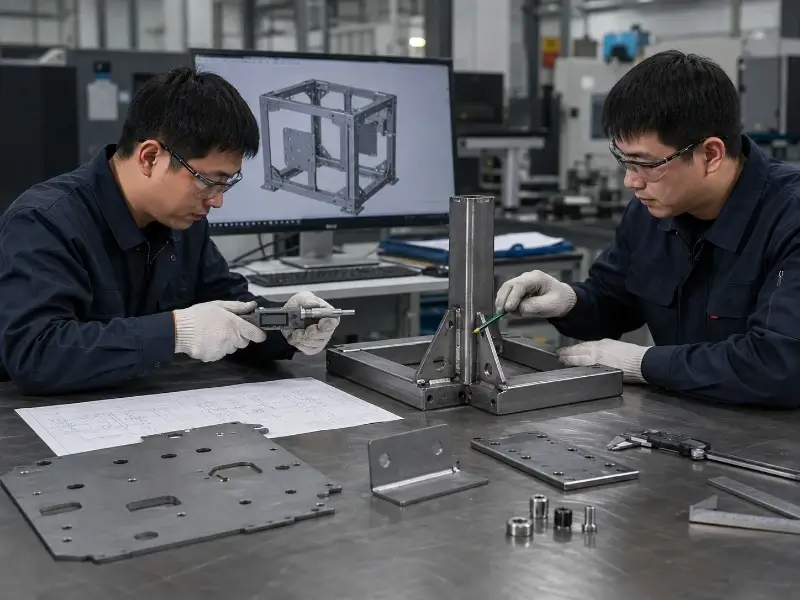
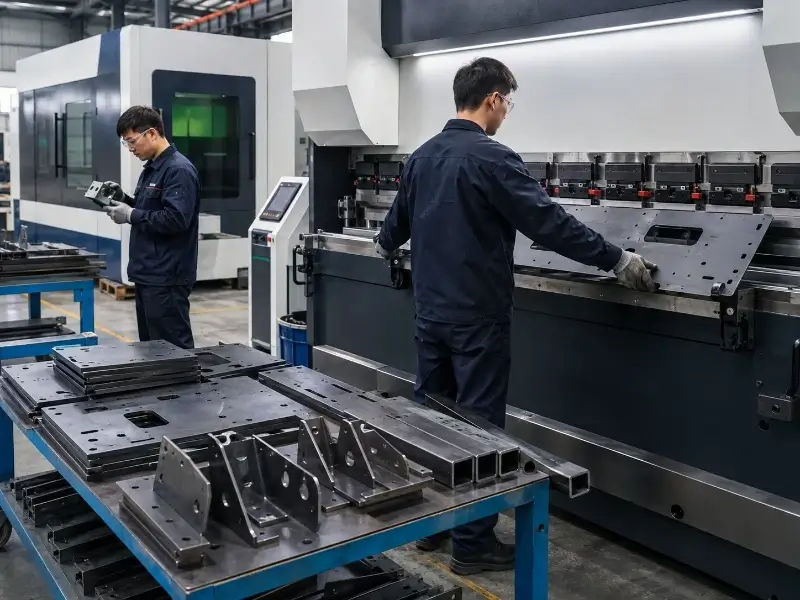
Your frame must arrive square, align with the equipment, and fit the mating parts without costly rework. TZR manufactures custom sheet metal frames, welded equipment frames, chassis structures, and mounting assemblies from your approved 2D drawings and 3D models.
We coordinate laser cutting, bending, machining, welding, hardware installation, finishing, inspection, and assembly under one production plan. This helps you reduce supplier handoffs and keep related components on the same revision.
From a single prototype to repeat production, our team can review your design, identify fabrication risks, and prepare a practical manufacturing route before production begins.
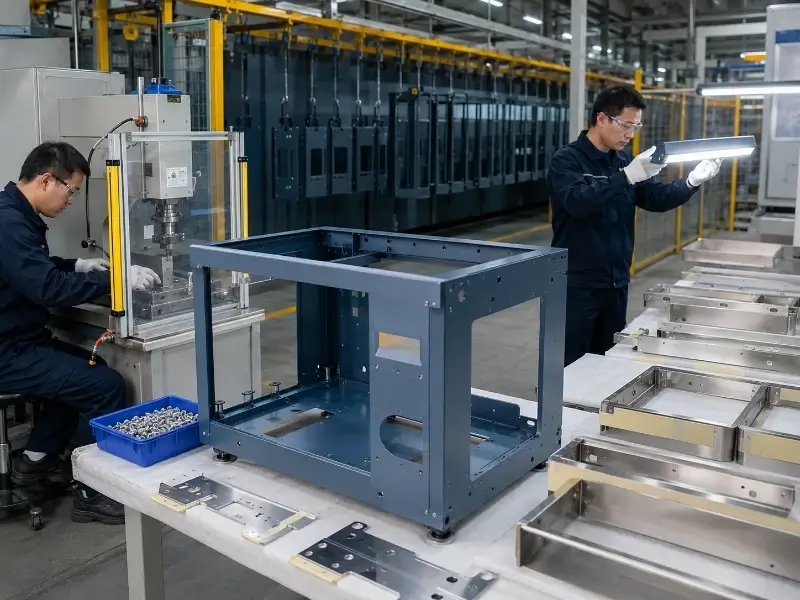
From large machine structures to compact mounting assemblies, TZR builds each frame around your approved design and final assembly needs.
Send the full assembly model when available. It helps us review interfaces, access, and mounting locations in context.
A frame may look simple until welding, finishing, and final assembly are considered.
Our DFM review focuses on issues that can affect cost, fit, and production stability.
Material thickness, bend radii, flange geometry, and hole positions near bends.
Joint design, weld access, fixture access, gussets, and support locations.
Critical mounting dimensions, hardware direction, tool clearance, and assembly access.
Post-weld machining, finish masking, cosmetic surfaces, and acceptable weld appearance.
You receive practical feedback before material is cut.
Production follows the approved drawing and revision.
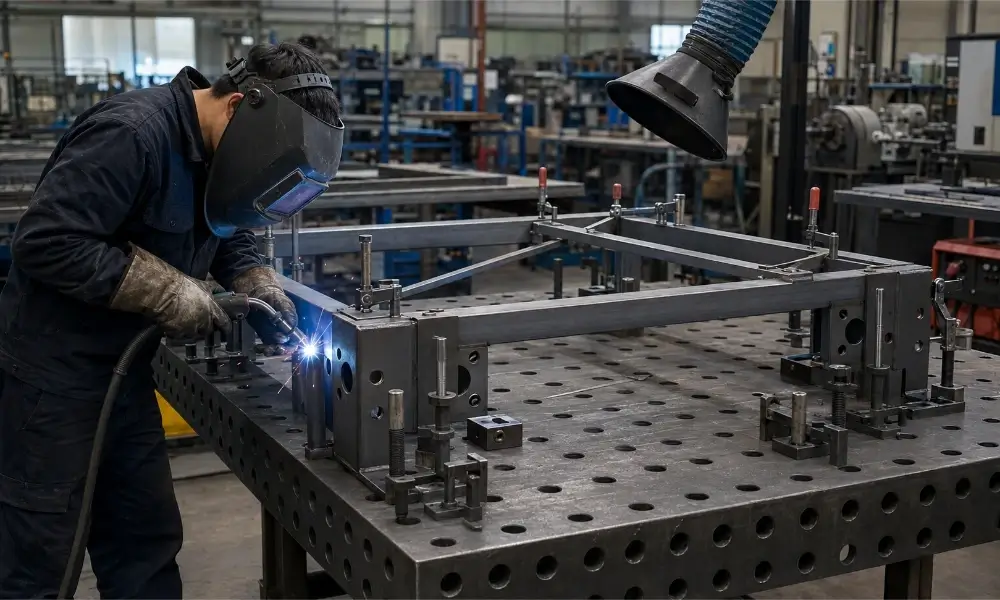
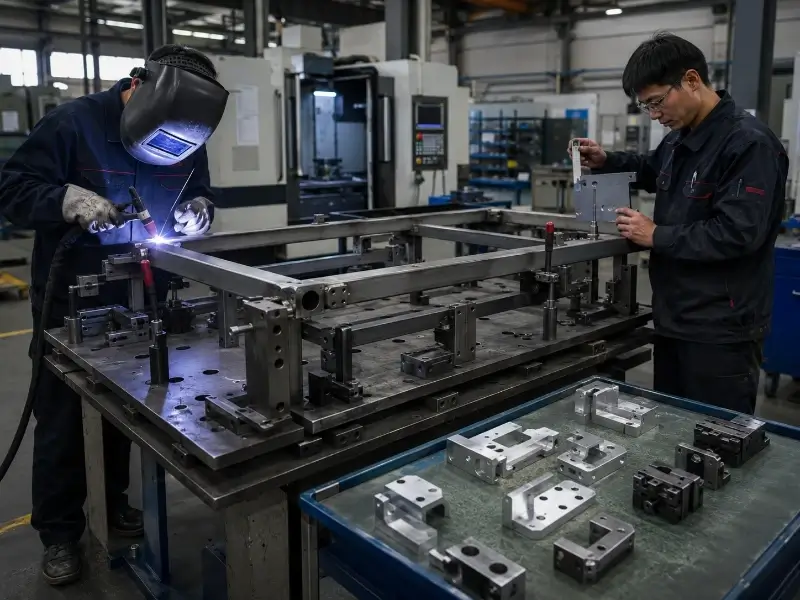
Welding heat can move mounting holes, twist long members, and pull corners out of square.
A clean weld is not enough—the finished frame must still match the required datums and interfaces.
We plan joint access, tack locations, welding sequence, heat input, and support points according to the design.
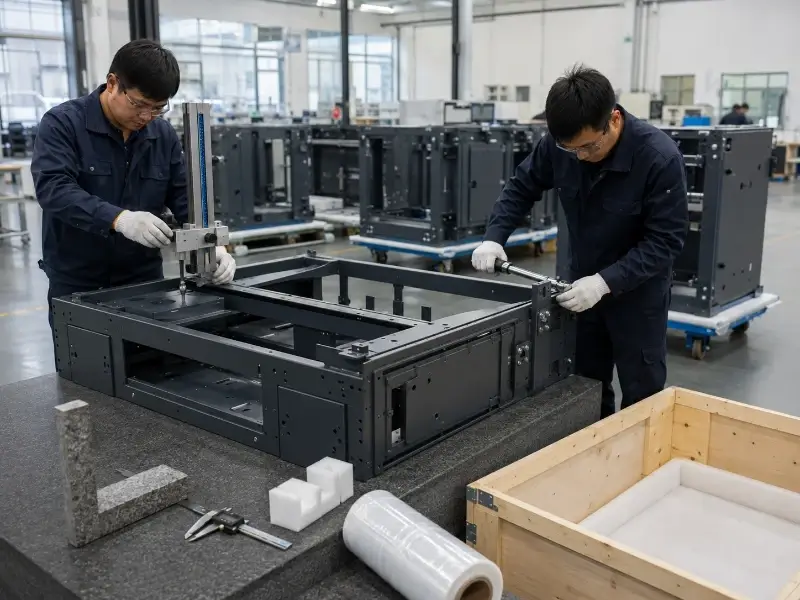
Locating blocks, clamps, fixtures, and inspection gauges help control important positions in prototype and repeat production.
Critical dimensions are identified before production so manufacturing and inspection focus on the features that affect your assembly.
TZR coordinates every stage under one production plan. This reduces supplier handoffs, revision conflicts, and assembly delays.
The manufacturing route is matched to your frame size, geometry, tolerance, finish, and production volume.
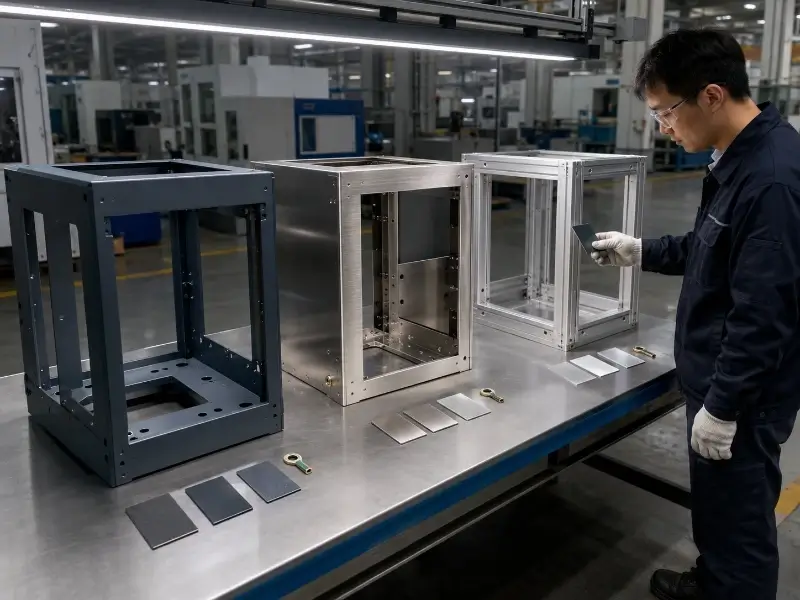
Material, joining, and finish should be selected together to balance strength, weight, corrosion resistance, and appearance.
Practical strength and cost efficiency for machine bases and indoor equipment. Common finishes include powder coating, paint, and plating.
For moisture, cleaning, chemicals, or higher cosmetic requirements. Options include brushing, polishing, passivation, bead blasting, and electropolishing.
Lower weight with natural corrosion resistance for mobile, electronic, and laboratory equipment. Alloy, welding, and finish should be reviewed together.
Identify visible surfaces, color, gloss, texture, masking areas, and acceptable weld appearance.
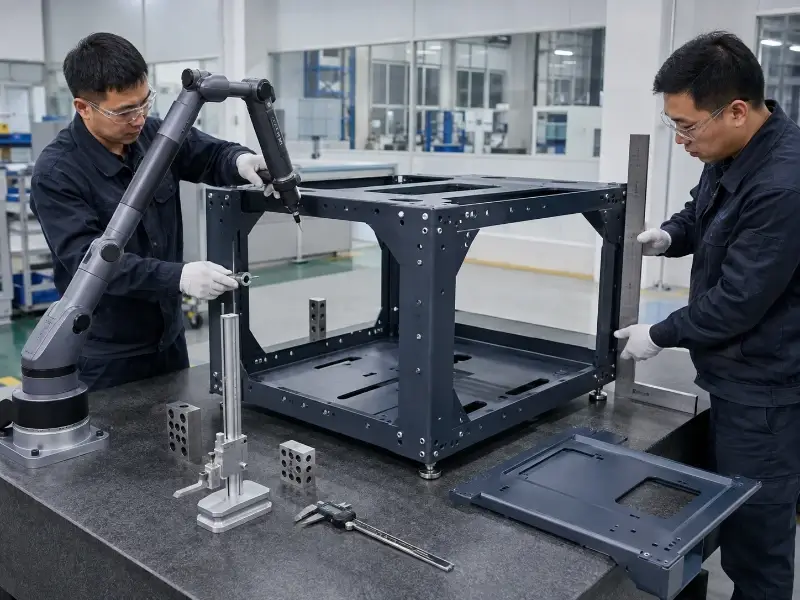
Inspection focuses on the features that affect installation, alignment, and final assembly.
Check overall size, squareness, flatness, mounting holes, and datum relationships.
Verify weld condition, hardware placement, coating coverage, color, texture, and protected areas.
Control the approved revision, critical requirements, inspection scope, and protective packaging.
Material certificates, dimensional reports, and first article records can be included when defined during quotation.
 English
  Spanish
  German
  Russian
  Italian
  French