TZR manufactures custom sheet metal enclosures from your 2D drawings, 3D CAD files, specifications, and bills of materials.
We support functional prototypes, low-volume production, bridge production, and repeat orders. Your project can include sheet metal fabrication, welding, CNC machining, hardware installation, surface finishing, mechanical assembly, inspection, and custom packaging.
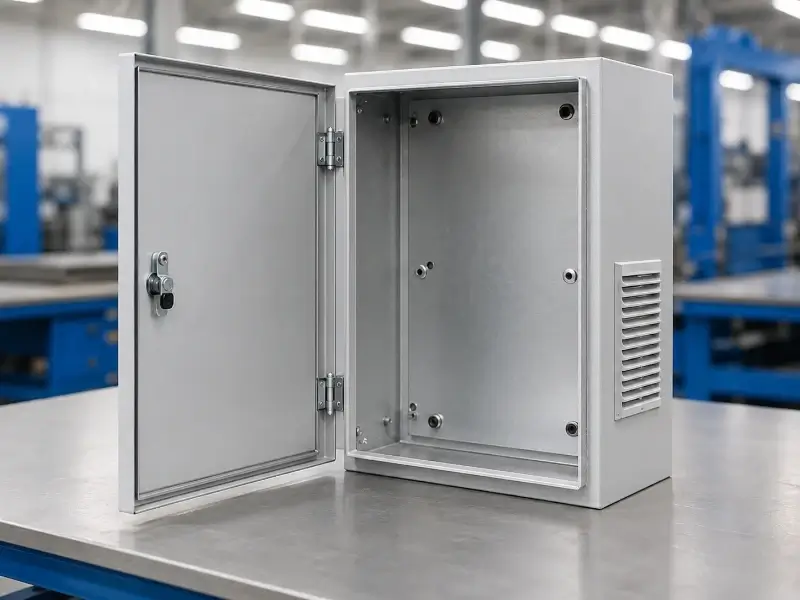
Manufactured strictly according to your approved drawings and specifications.
From functional prototypes to mass production, we support every stage of your project.
Carbon steel, stainless steel, aluminum, and galvanized steel to match your application.
Doors, panels, frames, brackets, and mounting components built to your requirements.
Welding, hardware installation, surface finishing, and assembly handled in-house.
Inspection based on approved drawings and project requirements to ensure consistency.
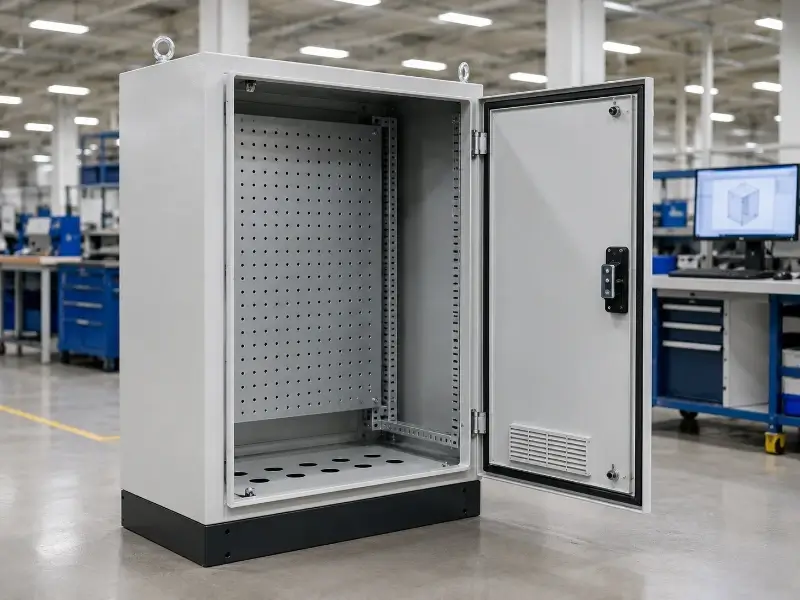
A standard enclosure may not match your equipment size, mounting layout, cable entries, internal components, or service requirements.
A custom sheet metal enclosure gives you control over the material, dimensions, hardware, finish, internal structure, and assembly method. It can also reduce drilling, rework, and installation changes after delivery.
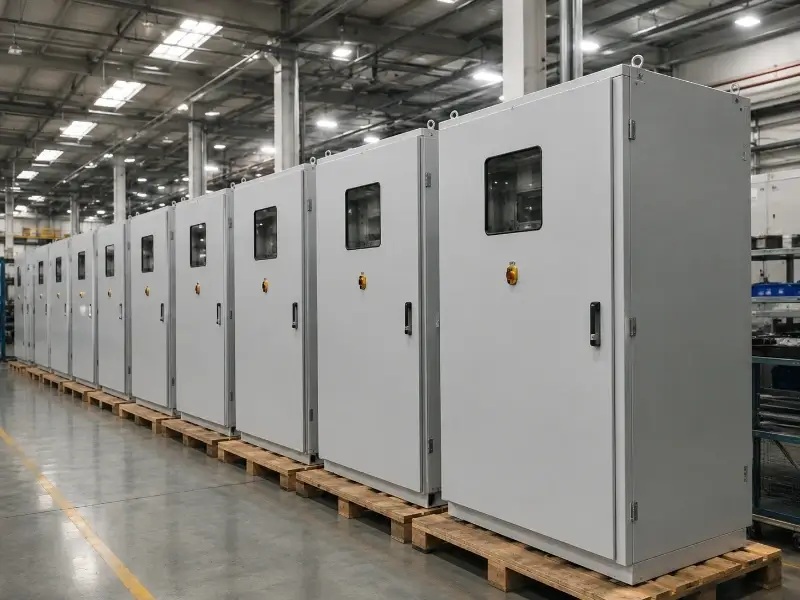
Custom designs for control boxes, wall-mounted enclosures, floor-standing cabinets, battery equipment enclosures, and power cabinets. Options can include hinged doors, removable covers, mounting plates, shelves, rails, and cable-entry panels.
Protect electronics, machinery, instruments, and internal assemblies with custom machine housings, electronic chassis, control panels, access panels, and aluminum housings.
Larger enclosures can use welded frames, formed panels, internal supports, and removable covers. The structure can be designed around strength, access, appearance, installation, and maintenance.
Material choice affects strength, weight, corrosion resistance, appearance, fabrication, and total manufacturing cost.
TZR commonly manufactures enclosures from carbon steel, stainless steel, aluminum, and galvanized steel. The final choice should match the installation environment and product requirements.
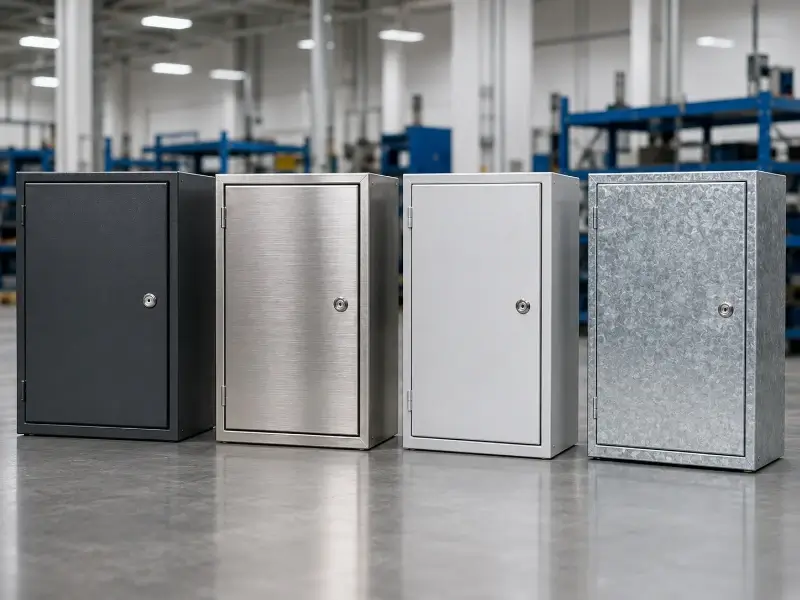
A practical choice for industrial cabinets, equipment housings, control boxes, and machine covers. It provides good strength and is commonly finished with powder coating or paint.
Suitable for corrosion resistance, frequent cleaning, and exposed metal appearance. Often used for laboratory, food-processing, medical, outdoor, and industrial equipment.
Reduces enclosure weight and provides natural corrosion resistance. Common for electronic equipment, portable products, telecommunications, and other weight-sensitive applications.
Useful when moderate corrosion protection is required. Common for electrical boxes, internal mounting panels, equipment housings, and industrial components.
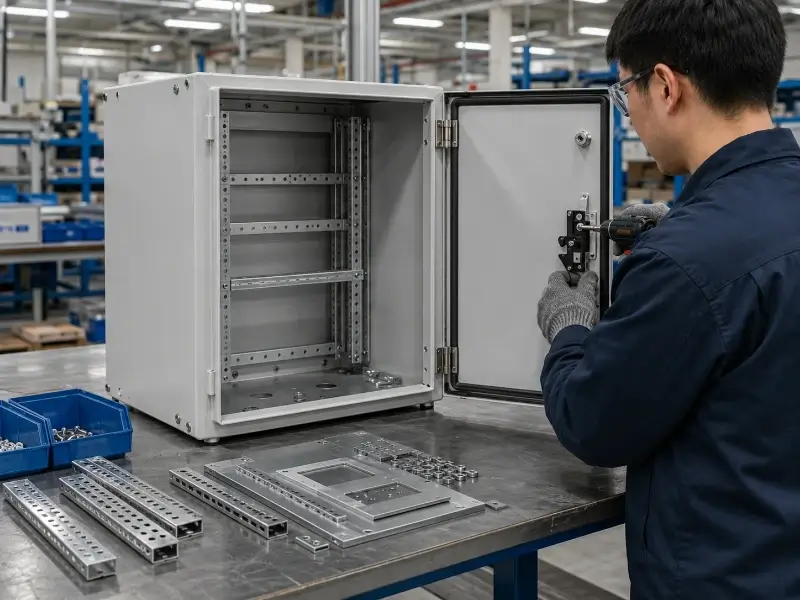
Including hardware and assembly in the project scope can reduce work after delivery and simplify supplier management. TZR can install customer-specified hardware and assemble internal enclosure components.
Self-clinching nuts, studs, standoffs, rivet nuts, weld nuts, and grounding studs can be installed according to the drawing.
Enclosures may include hinges, latches, cam locks, quarter-turn locks, handles, and mounting rails.
Mounting plates, shelves, brackets, dividers, covers, and support frames can be manufactured and assembled.
Provide approved part numbers, sourcing requirements, and assembly instructions when special components are required.
A custom enclosure normally passes through several connected manufacturing steps. The production route depends on material, thickness, part size, geometry, quantity, finish, and assembly requirements.
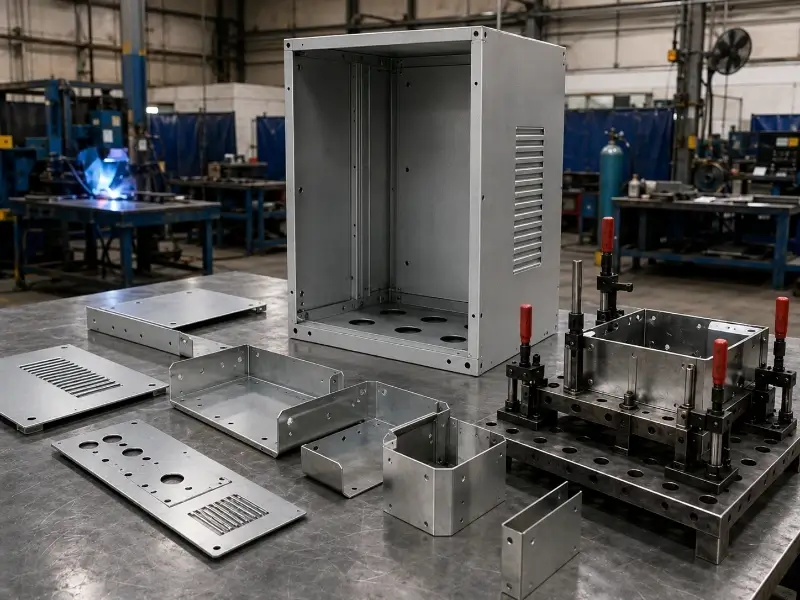
Laser cutting, turret punching, and stamping create profiles, holes, slots, knockouts, louvers, and cable-entry features.
Forms panels, doors, covers, brackets, and enclosure bodies. Bend radius, reliefs, and hole-to-bend distance affect final fit.
TIG, MIG, spot welding, laser welding, rivets, tabs, and fasteners are selected according to strength, appearance, and service access.
Edges, weld areas, and formed parts may be deburred, ground, or prepared before finishing and assembly.
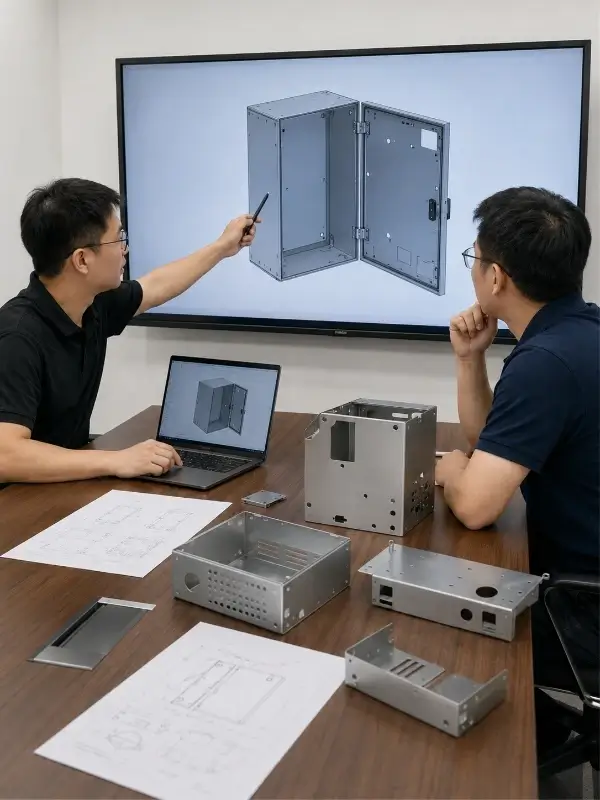
Small drawing details can create large problems after bending, welding, finishing, and assembly. TZR reviews the enclosure design before production to identify features that may affect manufacturability, fit, appearance, hardware installation, and production cost.
We review bend radii, hole-to-bend distance, panel gaps, and key formed dimensions that affect fit and assembly.
We check clearances, opening angles, overlaps, and latch positions for smooth operation and service access.
We confirm there is enough room to install fasteners, hardware, and internal components without assembly issues.
We review ventilation openings, sealing details, cable entries, drainage, grounding needs, and other functional requirements.
We identify visible surfaces and review weld locations, finishing direction, fastener visibility, and appearance requirements.
Quality control should focus on the dimensions and features that affect installation, operation, appearance, and repeat production. The inspection scope should be defined according to the approved drawing and project requirements.
The first completed parts or assembly may be checked before full production begins. The inspection scope may include overall dimensions, hole and cutout locations, bend angles, door fit, panel alignment, hardware positions, weld locations, and surface requirements.
Checks may be completed after cutting, bending, welding, hardware installation, finishing, and assembly. This helps identify problems before they affect the entire production batch.
Finished enclosures may be checked for door movement, panel gaps, latch operation, hinge alignment, hardware completeness, surface condition, grounding locations, assembly fit, and packaging requirements.
State any required documentation with the request for quote. This may include dimensional reports, first-article reports, material certificates, surface inspection requirements, sampling requirements, and packaging inspection records.
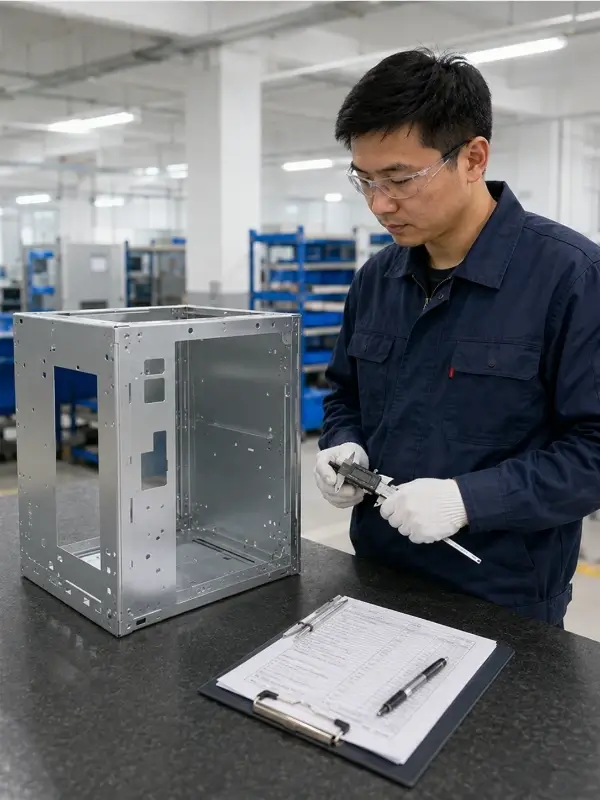
We support your project from the first prototype to stable, repeatable production.
We help you verify fit, function, hardware access, appearance, and assembly before moving forward.
We manufacture to the approved revision and manage changes to protect quality and consistency.
We support product launches, field testing, and early demand with flexible production.
We focus on consistency, traceability, and reliable delivery as your volumes increase.
 English
  Spanish
  German
  Russian
  Italian
  French