TZR manufactures custom metal brackets for industrial equipment, machinery, electronics, and commercial products. We support prototypes, low-volume builds, bridge production, and repeat orders.
Your brackets can include laser cutting, CNC bending, machining, stamping, welding, hardware installation, surface finishing, and assembly. Before production, our team reviews the drawing for bend clearance, hole position, tolerances, weld distortion, and assembly risks.
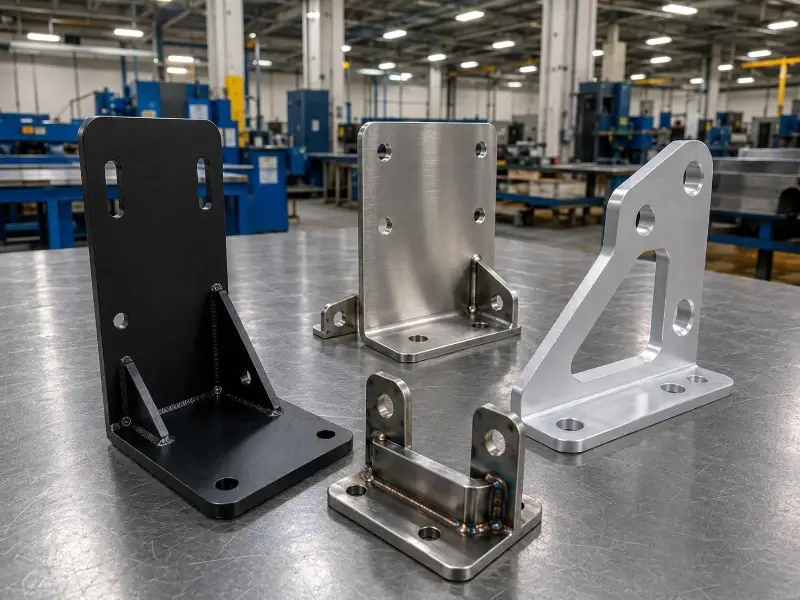
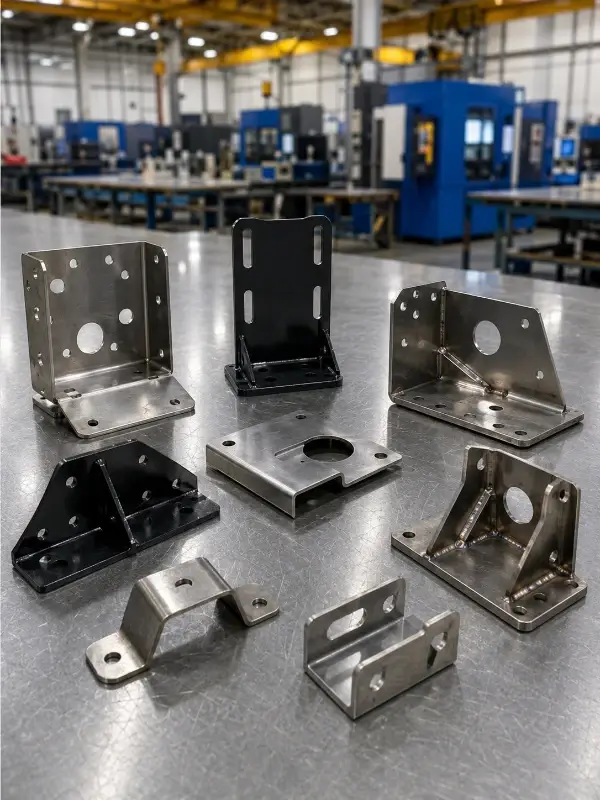
A custom bracket may support a motor, align a sensor, mount an enclosure, connect two assemblies, or reinforce a machine frame. Its function determines the material, thickness, forming method, finish, and inspection requirements.
TZR produces build-to-print brackets from customer drawings, CAD files, samples, specifications, and bills of materials.
For equipment, panels, and machine assemblies.
Used for structural support and reinforcement.
Common for formed mounting applications.
Support controls, modules, and internal components.
Suitable for reinforced and multi-piece structures.
Can include inserts, studs, rivets, and nuts.
Each project is reviewed according to its geometry, material, order volume, finish, critical dimensions, and final application.
The best production method depends on the bracket design, expected quantity, annual usage, and how likely the design is to change.
Best for prototypes, low-volume builds, and designs that may still change. Supports holes, slots, tabs, and formed flanges without hard tooling.
A good fit for stable designs and higher annual volume. Tooling cost should be weighed against unit price and program life.
Used when the part needs precision locating surfaces, threaded features, pockets, or thicker sections.
Suitable for reinforced structures and multi-piece assemblies. Can include welding, hardware installation, and assembly.
The right process should match the geometry, revision risk, volume, and final application.
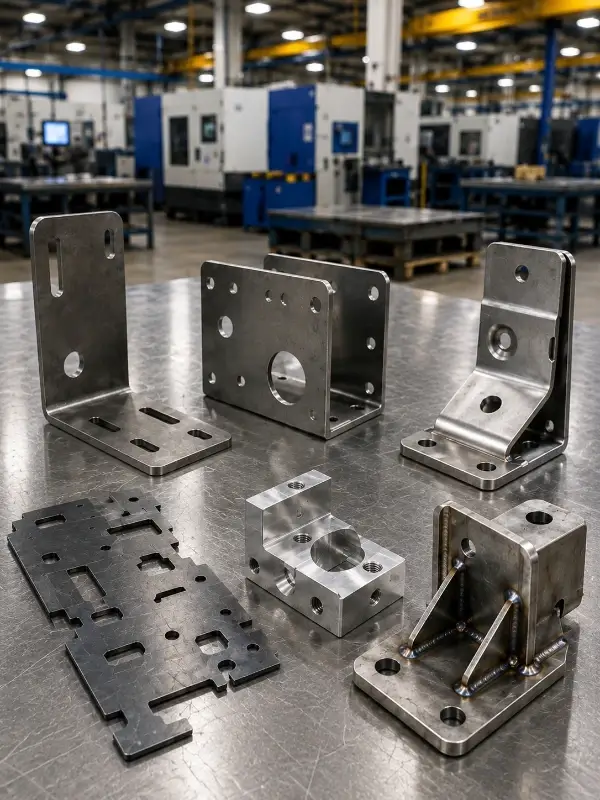
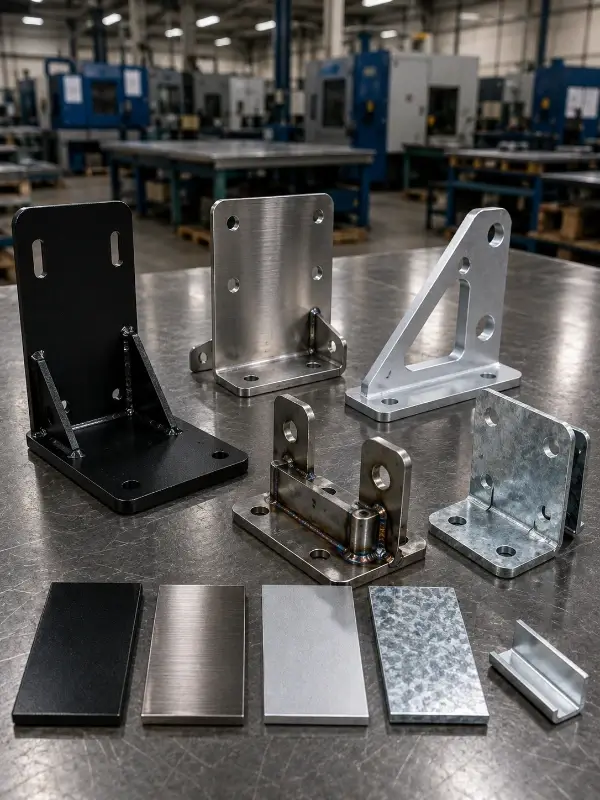
Material selection affects strength, weight, corrosion resistance, bending behavior, welding, finish appearance, and total cost.
A practical choice for machinery and general industrial brackets. Often finished with powder coating, paint, or zinc plating.
Used where corrosion resistance and appearance matter. The grade and surface condition should be specified.
Chosen when lower weight and corrosion resistance are important. Alloy and temper affect bending, welding, and anodizing.
Adds corrosion protection for steel brackets. Exposed edges and welded areas should be reviewed before production.
Common options include powder coating, painting, anodizing, zinc plating, passivation, and brushing.
Small design decisions can affect bracket consistency, tooling, assembly, and quotation cost.
The bend radius must suit the material and thickness. Very short flanges can create forming problems.
Features placed too close to a bend may stretch or distort during forming.
Tight tolerances should focus on mounting holes, alignment features, and mating surfaces.
Welding can move holes and change angles. Fixtures and weld sequence help control movement.
Studs, inserts, and rivets need the right hole size, sheet thickness, and edge distance.
Visible surfaces and edge conditions should be defined before production.
Send your drawings to review bend clearance, tolerances, and assembly risk.
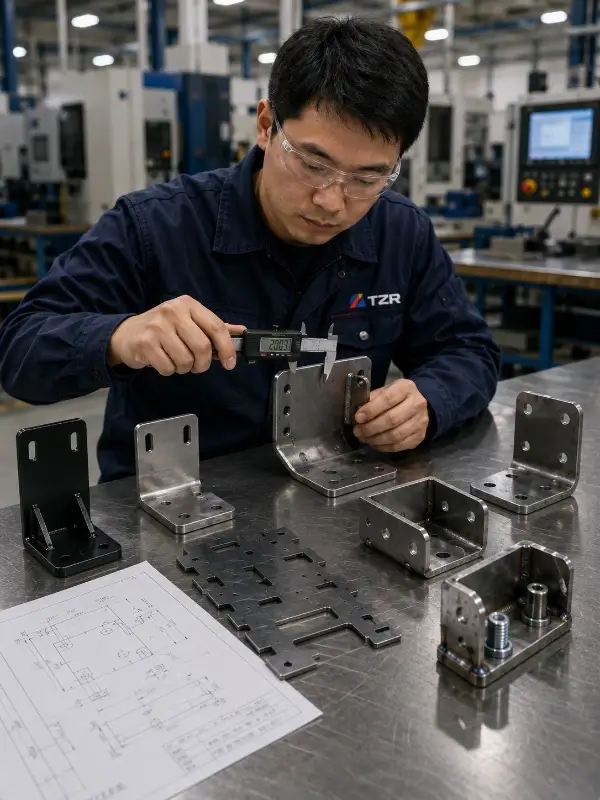
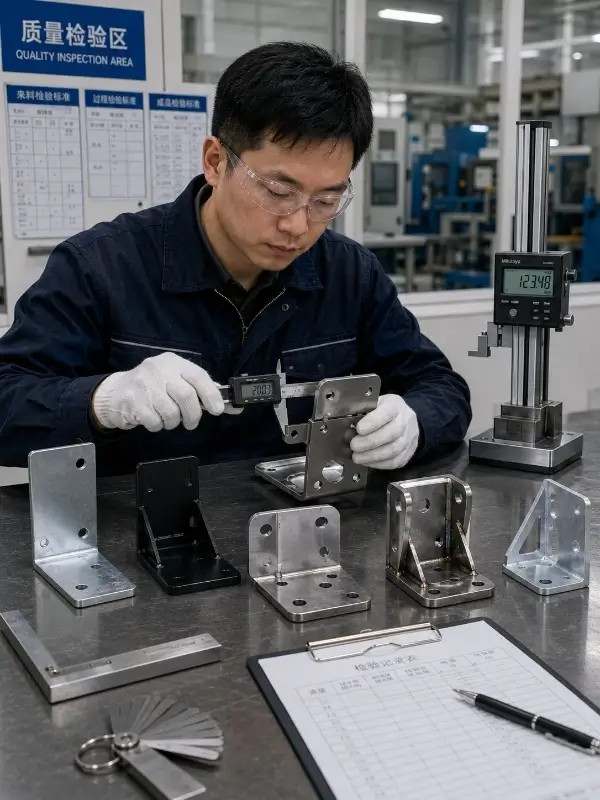
Inspection should focus on the features that affect fit, function, appearance, and assembly.
Confirm the material specification and approved drawing revision before production.
Check critical dimensions, bend angles, and hole locations before the run continues.
Monitor critical features during cutting, forming, welding, and hardware installation.
Review cosmetic surfaces, installed hardware, and final fit before shipment.
Protect finished brackets and verify quantity, labeling, and packaging condition.
A sample or first article can confirm fit, finish, and assembly before repeat production.
Each order should follow the latest approved revision and change history.
The finished cost depends on the complete production route, not only the amount of metal in the part.
Main cost and lead-time factors include:
A small design change may remove a special tool, secondary operation, difficult weld, or manual finishing step. This can reduce cost without changing the function of the bracket.
When comparing suppliers, review tooling, unit price, packaging, freight, inspection, communication, quality risk, and repeat-order consistency as part of the total landed cost.
TZR reviews your drawings and helps you find the best balance.
 English
  Spanish
  German
  Russian
  Italian
  French