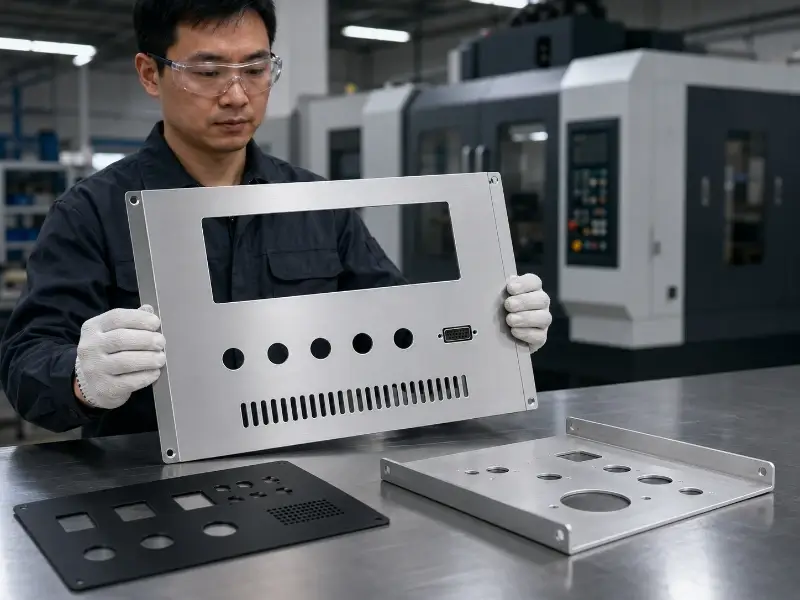
TZR manufactures custom aluminum front panels for industrial controls, electronic equipment, instruments, and machinery. We build each panel to your drawings, CAD files, finish specifications, hardware list, and artwork.
Our team coordinates cutting, machining, bending, hardware installation, surface finishing, graphics, inspection, and protective packaging. Keep fit, appearance, and drawing revisions aligned through one manufacturing contact.
Start with the files you have. We will identify open technical points before quotation.
A front panel can look correct and still create problems during assembly. A display may sit off-center, a connector may bind, or a fastener may interfere with a component behind the panel.
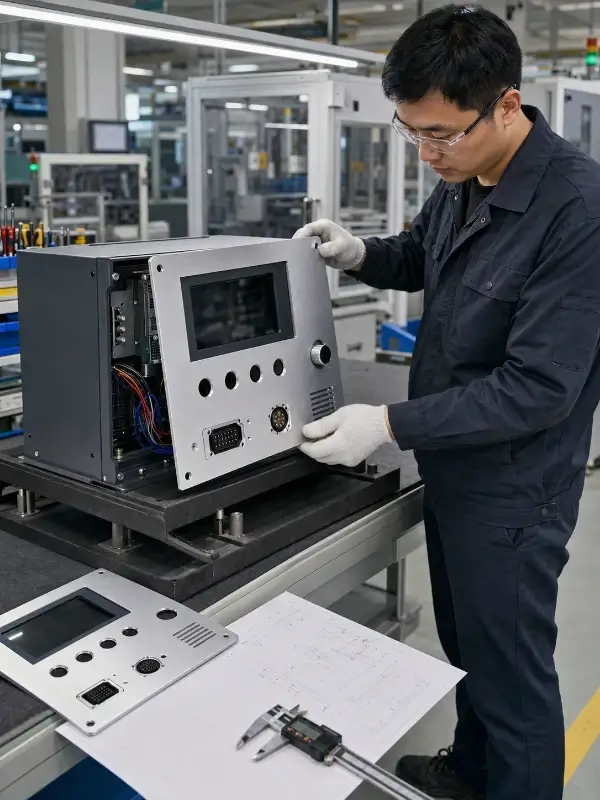
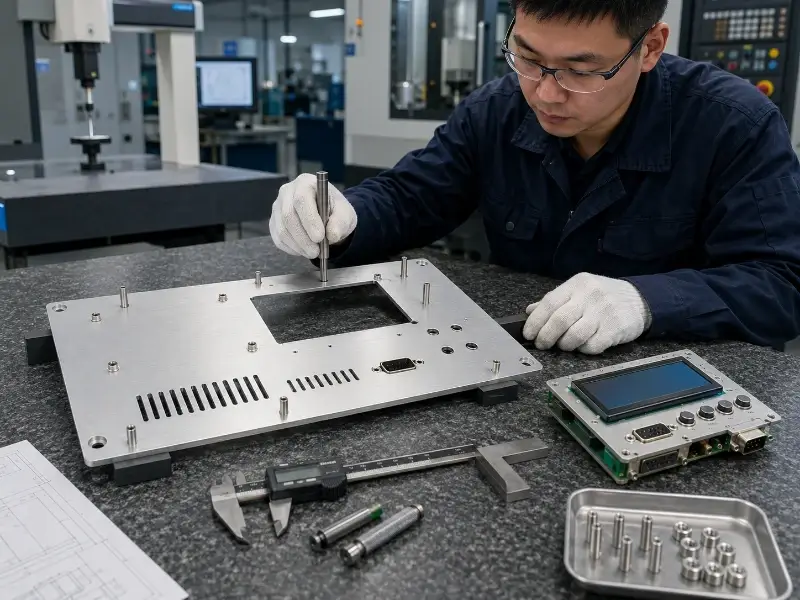
TZR checks the relationship between cutouts, mounting holes, panel edges, bends, installed hardware, and visible gaps. Send the mating-part drawing or 3D model when the panel must fit an existing assembly.
Check display, switch, and connector positions against mating components.
Review fasteners, standoffs, bends, and the space behind the panel.
Keep drawings, CAD models, and artwork on the same approved revision.
For operator interfaces, equipment faceplates, control panels, display bezels, rack panels, enclosure fronts, and machine covers.
The material and manufacturing route affect stiffness, forming, machining time, surface appearance, and cost.
Panel thickness can affect flex, connector reach, countersink depth, hardware selection, machining time, and total cost.
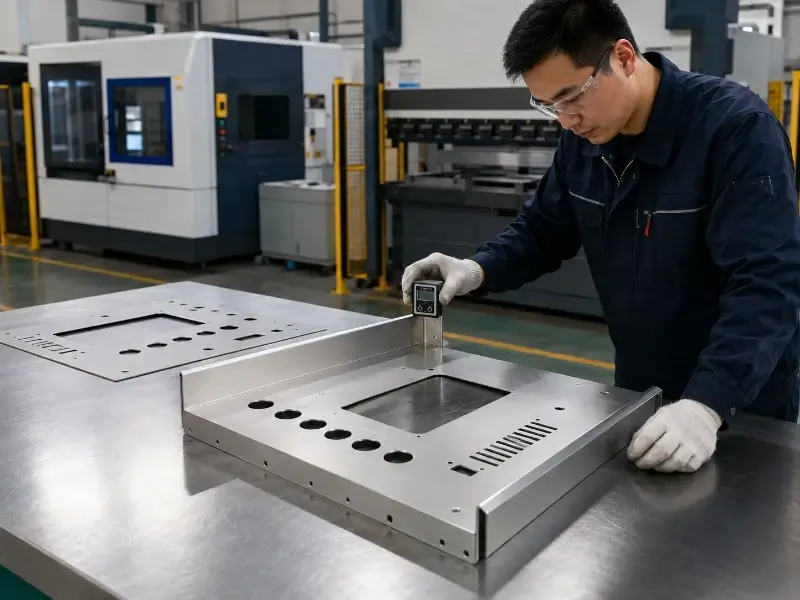
Cutouts, mounting patterns, formed edges, and installed hardware must work together in the final assembly.
Specify press-in nuts, studs, standoffs, and rivets by part number when possible. Show the insertion side, protrusion direction, and cosmetic surfaces that must remain free of installation marks.
Identify the dimensions that control fit and the datum structure used to locate them. A focused tolerance plan supports the right process, useful inspection, and better cost control.
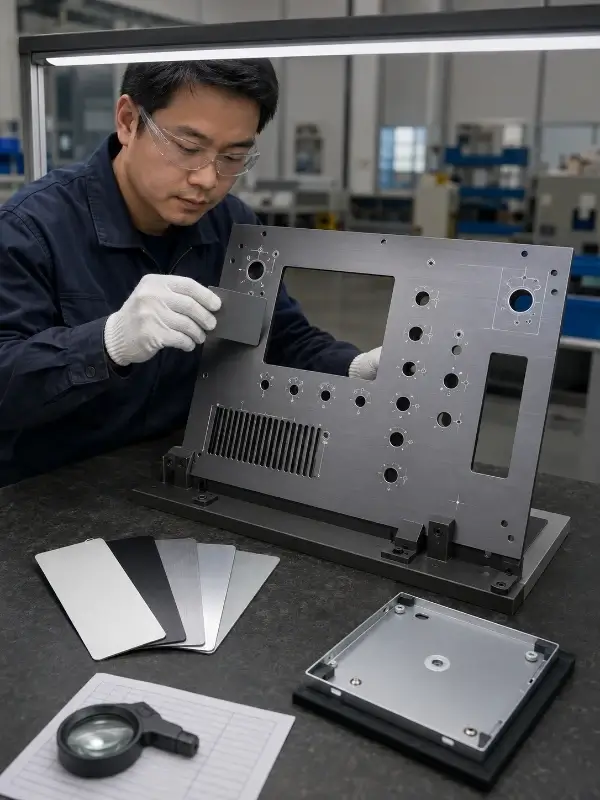
The finish, color, grain direction, graphics, and uncoated contact areas need to work as one system.
Select anodizing, powder coating, brushing, polishing, or bead blasting based on appearance, wear, corrosion exposure, and budget.
Define label color, location, orientation, and wear requirements. Use vector artwork when available.
Mark grounding points, connector contact zones, protected areas, and threads that must remain clear.
An approved sample or defined color reference helps control finish and graphic consistency before repeat production.
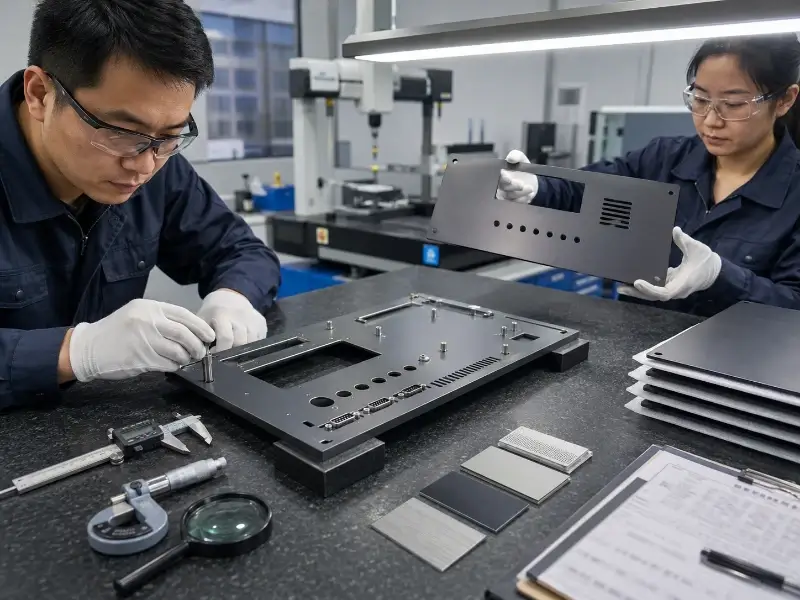
An engineering sample lets your team check fit, access, label position, surface appearance, and handling before a larger build.
Confirm assembly fit and the complete visual result.
Match the drawing, 3D model, artwork, finish notes, and hardware list.
Lock the agreed files, finish standard, and inspection points.
Use the approved reference to support consistent future orders.
Panel size, alloy, thickness, machining time, bends, hardware, finish, graphics, inspection records, packaging, and quantity all affect the quote.
As demand grows, TZR can review nesting, fixtures, production methods, inspection, and packaging for practical cost improvements.
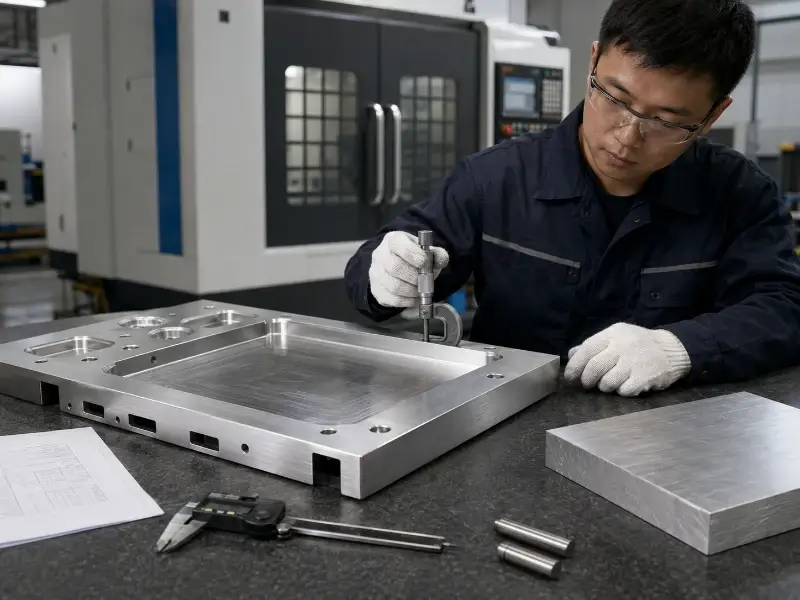
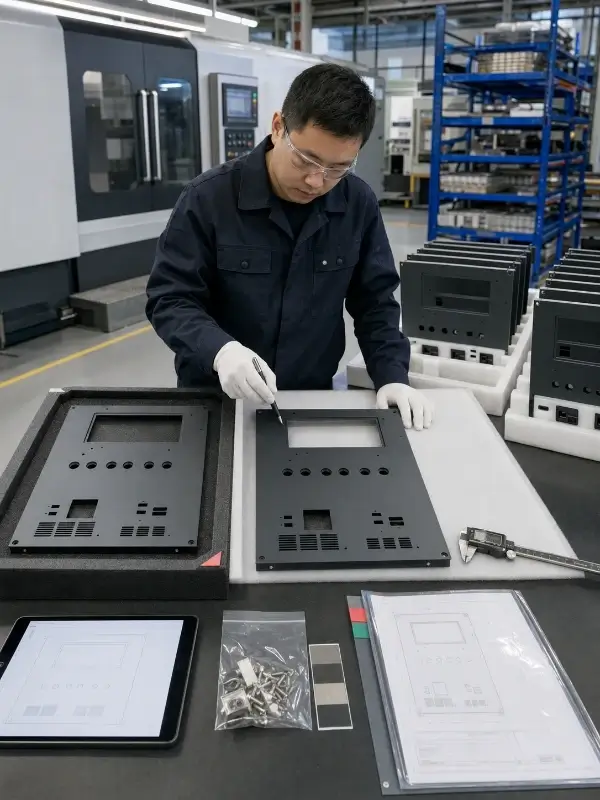
Inspection should reflect how the aluminum front panel works in the finished product.
Overall size, mounting-hole patterns, display and connector positions, formed flanges, countersinks, and installed hardware.
Scratches, finish consistency, grain direction, color range, printing position, and protected surfaces.
ISO 9001:2015 quality system. Material certificates, dimensional reports, first article records, finish documents, and batch traceability can be confirmed before production.
 English
  Spanish
  German
  Russian
  Italian
  French